
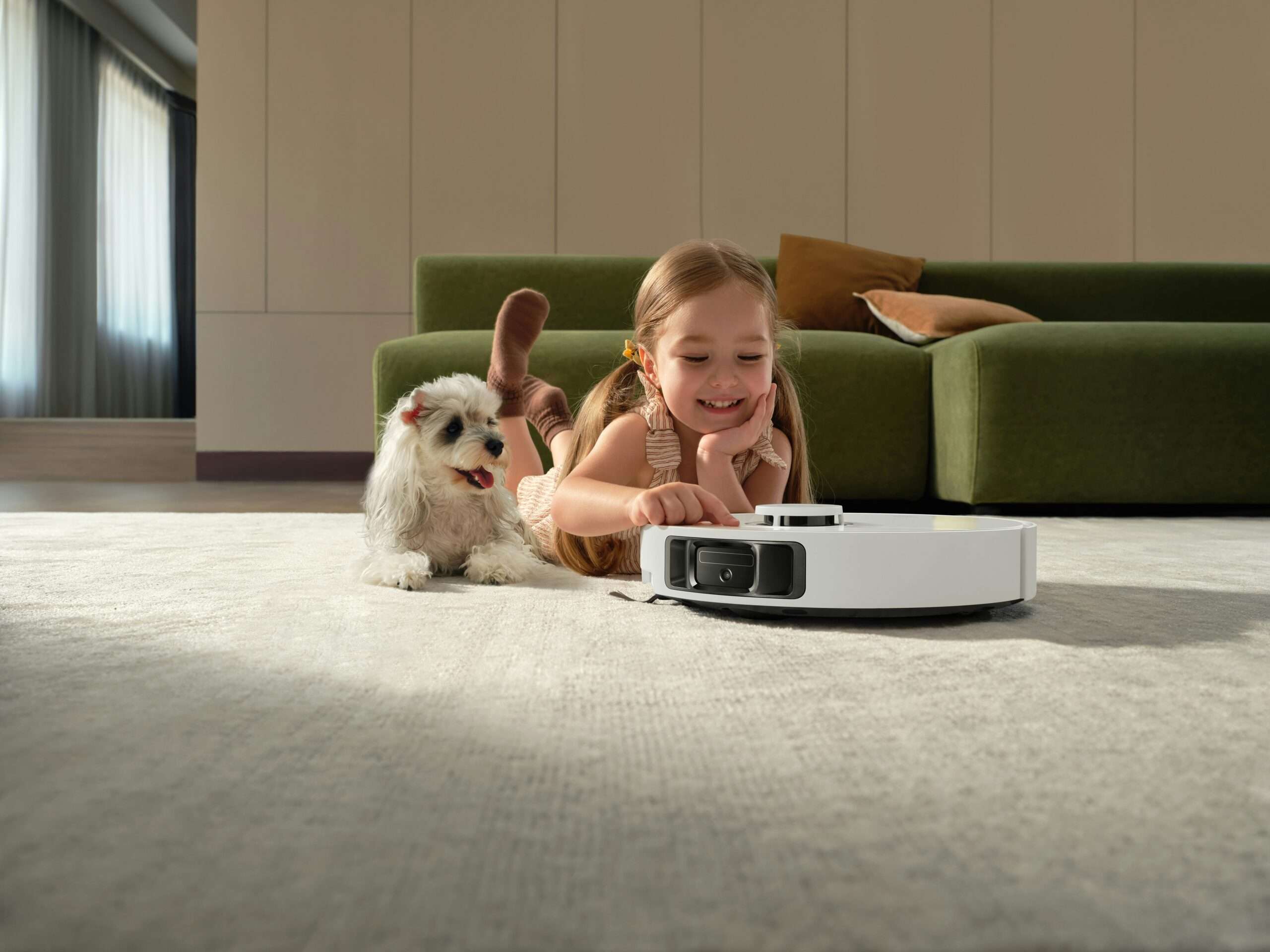
For years, robot vacuums have promised to eliminate the chore of floor cleaning from our daily routines. Yet anyone who owns one knows the reality: rescuing trapped robots from under furniture, untangling charging cables from brushes, and manually emptying dustbins have remained frustratingly common interruptions. That’s changing faster than most people realize.
The latest generation of robot vacuums unveiled at CES 2025 and throughout the year signals a fundamental shift in home automation. These aren’t just smarter vacuums—they’re genuinely autonomous household assistants that can handle obstacles, maintain themselves, and adapt to your home’s unique challenges with minimal human oversight.
Robotic Arms: The Game-Changing Innovation
The most eye-catching development hitting the market is the integration of mechanical arms into robot vacuum designs. Roborock’s Saros Z70, launched in January 2025, features a five-axis mechanical arm capable of lifting and relocating objects weighing up to 300 grams. This innovation addresses one of the most persistent pain points for robot vacuum owners: pre-cleaning the floor.
The device can detect and remove obstructions including socks, small towels, tissues, and sandals. During its initial cleaning session, the vacuum identifies movable objects, marks their locations, then returns in a second pass to clean the previously blocked areas. For busy households where children’s toys or pet accessories constantly litter the floor, this capability transforms the cleaning experience from supervised to truly hands-off.
The mechanical arm functionality extends beyond mere obstacle removal. Users can program the vacuum to place collected items in designated storage compartments, effectively training the device to perform basic tidying tasks alongside its primary cleaning function.
AI-Powered Navigation: Seeing and Thinking Like Never Before
Modern robot vacuums have evolved far beyond the bump-and-turn navigation of earlier generations. Current models incorporate advanced AI with cutting-edge perception to map spaces with precision similar to drone navigation systems, avoiding collisions and climbing small thresholds.
The Roborock Saros 10R’s StarSight Autonomous System 2.0 combines time-of-flight sensing with RGB cameras to reliably detect and weave around cables, toys, and low-lying furniture. These systems don’t just see obstacles—they understand them. Advanced models can now recognize over 120 different object types, from pet bowls to electrical outlets, adjusting their cleaning strategy accordingly.
This contextual awareness extends to floor types as well. Vacuums now automatically detect when they transition from hardwood to carpet, adjusting suction power and deciding whether to deploy or retract mopping pads. The days of dragging wet mop pads across your bedroom rug are finally over.
Self-Maintenance: The Final Frontier of Autonomy
Perhaps the most significant advancement toward true autonomy comes from self-maintenance capabilities that eliminate the most tedious aspects of robot vacuum ownership.
Premium models now feature docking stations that handle dust collection, mop washing with hot water, heated air drying, automatic water tank refilling, and even dock self-cleaning. Some systems can operate for 120 days without requiring users to empty debris bins or replace mop pads.
The engineering behind these all-in-one docking stations represents years of refinement. They incorporate multiple subsystems working in concert: high-powered suction to extract fine dust particles from robot filters, precise water management systems that measure and dispense cleaning solution, heated drying mechanisms that prevent mildew formation on mop pads, and filtration systems that keep exhaust air clean during the emptying process.
For pet owners specifically, these advances prove invaluable. Models like the Ecovacs X9 Pro Omni feature ZeroTangle 3.0 technology with V-shaped rollers and anti-tangle side brushes that prevent pet hair from wrapping around moving parts.
Market Evolution and Consumer Readiness
The robot vacuum market has reached an inflection point. Roborock’s president expects robot vacuum cleaners to become as essential as washing machines, potentially within three years as AI technology continues advancing.
Industry data supports this optimistic outlook. Revenue growth across major manufacturers has remained robust, with companies investing heavily in AI research facilities and expanding their engineering teams. The competition has intensified significantly, with established players like iRobot, Roborock, and Ecovacs now joined by companies bringing expertise from adjacent fields—drone manufacturers contributing aerial navigation technology, and automotive companies applying sensor fusion techniques from autonomous vehicles.
Consumer sentiment reflects growing acceptance of higher price points for premium features. While entry-level models remain available below $400, flagship devices with comprehensive autonomy features command prices exceeding $1,600. Yet these premium models are selling, as buyers recognize the value proposition of genuinely hands-off cleaning.
The Technology Stack Behind Autonomy
Understanding what makes modern robot vacuums autonomous requires looking at the converging technologies:
- Computer Vision and AI: Multiple cameras and sensors feed data to neural networks trained on millions of household images, enabling real-time object recognition and classification.
- LIDAR and Spatial Mapping: Laser-based ranging systems create detailed 3D maps of living spaces, updating continuously as furniture moves or new obstacles appear.
- Motor Control and Mechanics: Precision motors enable features like automatic mop pad extension for edge cleaning, chassis height adjustment for climbing thresholds up to 4 centimeters, and brush pressure modulation based on debris type.
- Thermal Management: Hot water washing systems for mop pads, heated air drying to prevent bacteria growth, and temperature regulation to optimize cleaning solution effectiveness.
- Connectivity and Updates: WiFi-enabled firmware updates continuously improve performance, add new recognized object types, and refine cleaning algorithms based on aggregate user data.
Practical Implications for Different Households
The autonomous revolution doesn’t benefit all households equally. Large homes with multiple floor types see the most dramatic improvement, as these environments previously required the most human intervention and supervision. Pet owners experience substantial quality-of-life improvements, with anti-tangle brushes and increased suction power handling shedding seasons more effectively.
Families with young children gain peace of mind from obstacle avoidance systems that can detect and route around small toys, reducing the pre-cleaning burden. Those with mobility limitations find self-maintaining systems particularly valuable, as bending to empty dustbins or clean mop pads multiple times weekly becomes unnecessary.
However, smaller apartments might find premium features excessive. A compact living space without stairs, pets, or multiple floor types may not justify the cost premium of advanced autonomous models.
Looking Ahead: What’s Coming Next
The trajectory points toward even greater autonomy. Manufacturers showcased stair-climbing prototypes at IFA 2025, with models designed to navigate between floors independently using specialized track systems and 3D vision. If these concepts reach production successfully, they’ll eliminate the current need for separate docking stations on each floor of multi-level homes.
Predictive cleaning capabilities represent another frontier. Future models may integrate with smart home ecosystems to automatically increase cleaning frequency when weather apps show incoming rain (anticipating tracked-in mud) or when calendar applications indicate upcoming house guests.
Voice assistant integration continues deepening, with some manufacturers exploring natural language control that goes beyond simple start/stop commands to understand requests like “focus on the living room before guests arrive at 6 PM.”
The Path to True Autonomy
True autonomy means operating for extended periods without requiring human attention, intervention, or maintenance. The latest robot vacuums approach this ideal more closely than ever before. Innovations in mechanical manipulation, artificial intelligence, self-maintenance systems, and adaptive cleaning strategies have collectively pushed the technology toward genuine “set it and forget it” operation.
For consumers considering an upgrade, the calculus has shifted. Where early adopters once bought robot vacuums as conveniences that still required babysitting, today’s buyers can genuinely expect weeks of autonomous operation with minimal intervention. The machines now clean under furniture too low for earlier models, navigate around obstacles that would have trapped previous generations, and maintain themselves with automated systems that previous owners handled manually.
The autonomous cleaning future isn’t arriving someday—it’s here now, quietly transforming how millions of households approach one of life’s most persistent chores. As AI capabilities continue advancing and manufacturing costs decrease, these once-premium features will cascade into mid-range and eventually entry-level models, making truly autonomous floor cleaning accessible to the mass market.
The question is no longer whether robot vacuums can clean without human intervention, but how quickly the technology will become standard in every home. Based on current innovation trajectories and market adoption rates, that timeline appears to be measured in years, not decades.
About This Technology Shift: The autonomous robot vacuum revolution combines advances in AI, mechanical engineering, and smart home integration to deliver genuinely hands-off cleaning. As these devices continue evolving, they’re redefining expectations for home automation and setting new standards for what “smart home” truly means.